
“Centralization” is as old as the industrialization itself, creating economies of scale and reducing the production-cost per unit.
The concept of centralization eventually developed into the services sector. Most common are near-shoring and off-shoring in consulting and software-development.
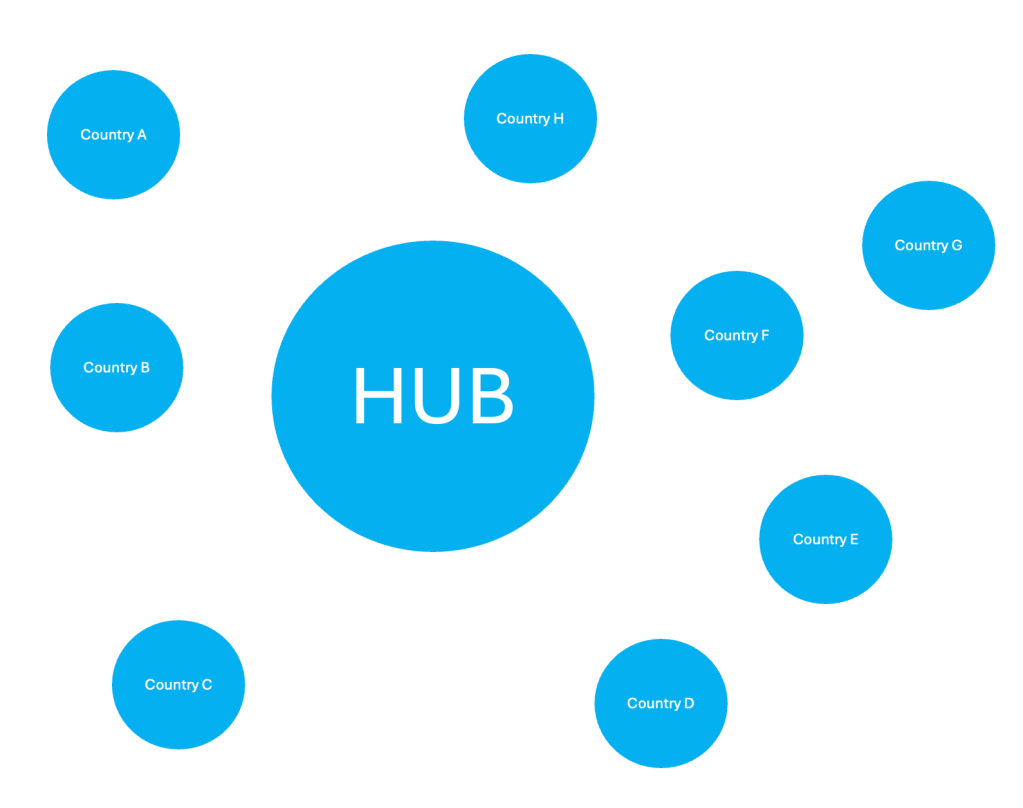
Also other services, such as logistics, developed their centralization concept, in which one central hub is delivering services for an entire region, called “hub-and-spoke”.
This is the same concept that is currently trending in “go-to-market” roles for big tech companies (marketing, business development, sales & customer success), in which one hub is delivering services to multiple markets in a specific region (e.g. Europe).
Benefits
From my perspective, its mainly 3 big benefits
- Attractive destination for talent
- Ecosystem of onboarding, learning & best-practice sharing
- Cost reduction
Companies are looking for destinations, which attract highly educated talents for multiple markets (language requirements). Hence, there are more tech companies developing such hubs in countries such as Spain (Barcelona, Malaga) or Portugal (Lisbon), to attract highly educated & motivated talent.
By attracting talent to a single hub and not have them scattered all over the region, tasks such as onboarding, peer-to-peer learning & best-practice sharing are accelerating. Programs, to bring new talent up to speed, are developed and a culture of learning (growth mindset) is established.
By centralizing hiring, onboarding and learning, certain cost reductions are achieved, which reduces the cost-of-goods-sold of those players and increases the overall profitability.
What big tech doesn’t know about hub and spoke
If all of the above applies, why aren’t more companies betting on a hub model for their go-to-market?
To have not only the talent attraction and onboarding centralized, but also a sustainable go-to-market established in those hubs, one critical ingredient is missing so far: the quality of relationship with the local market being served.
It is critical that each hub employee develops quality relationships with their destination markets (colleagues, customers, partners), as well as having the destination market-units value the hub colleagues and creating a common culture.
 postnovo
Leave a comment