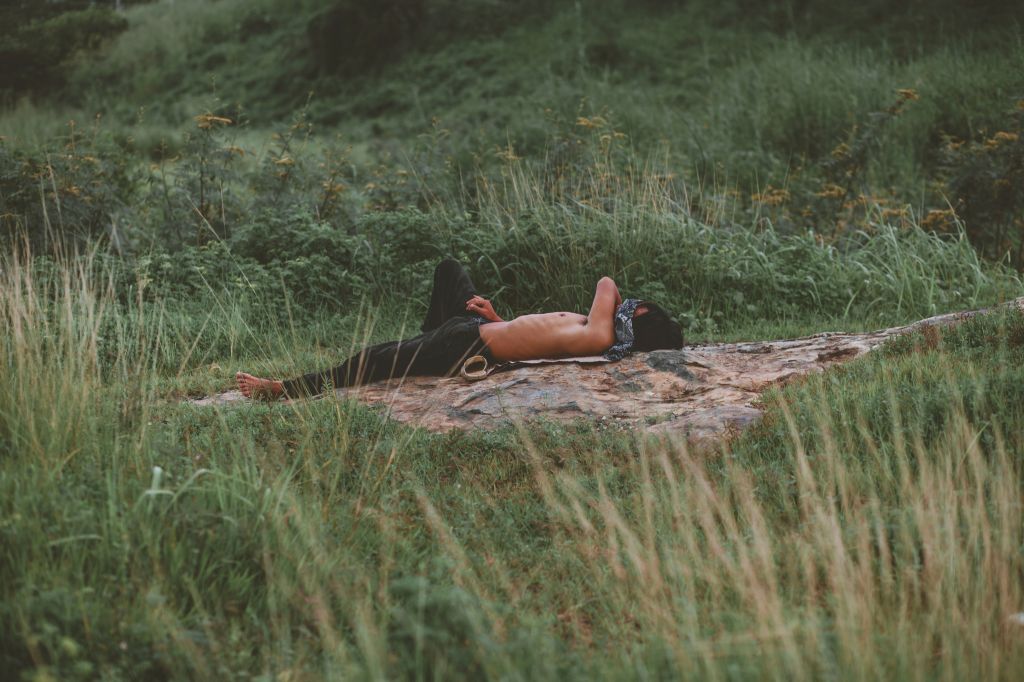
Five sessions. One breathwork workshop. And a growing realization: the thing closest to us is the one we’ve neglected the most.
Session 1 (April 10, 2026): The tape over the mouth
The first evening begins with an unexpected insight: I breathe wrong. Not occasionally, but systematically, most of my life. Mouth instead of nose. Chest instead of belly. Fast instead of slow.
The consequence? Mouth breathing during sleep means you never truly rest. The nervous system stays on alert, especially after stressful days, after evening coffee, after alcohol. The body reads mouth breathing as a stress signal.
“An incoming email can trigger the same fight-or-flight response as a physical threat. Our bodies were never built for constant stimulation.”
The solution sounds absurd but makes perfect sense: mouth tape at night. Nasal breathing activates the parasympathetic nervous system, the body’s rest mode.
First homework: breathe slowly, with pauses, focus on the exhale. Train the diaphragm, not the accessory muscles. Breathe into the belly until the ribs expand in every direction, a full 360 degrees.
Session 2 (April 23rd, 2026): The lungs breathe in all directions
Second session, first surprise: the lungs don’t just expand downward into the belly: they expand in every direction, a full 360-degree movement.
The diaphragm is the main actor, a muscle that can and must be trained like any other.
Today we measure with the Bolt Test: hold your breath for 15 seconds after a relaxed exhale. How quickly does the first discomfort arrive? The higher your CO₂ tolerance, the longer you last. My result is sobering.
Excercises:
| Resistance breathing Narrow the nostrils, hold a light air hunger (5 min.) | Lung stretch Inhale, top up 2–3 times, hold the full expansion (8 min.) | Physiological sigh Double inhale, one top-up (3–5 breaths for instant calm) |
- The physiological sigh: a double inhale, like a suppressed sob, is the standout of this session. Neuroscientists call it the fastest known method to down-regulate the nervous system. No app subscription required.
Session 3 (May 15th, 2026): Breath as resource, not discipline
The third session begins with repetition and one important reframe. We run through the techniques again, but the real lesson today is about consistency: how do you actually keep doing this?
“Breath is not a discipline. It’s a resource. Something you use because it works for you, not because you have to.”
That sounds like a minor semantic shift. It isn’t. People who breathe because they feel they must, stop. People who breathe because they feel what it does, continue. It reminds me of something I know from coaching: change doesn’t come from pressure. It comes from connection.
New today: Breath of Fire from the Pranayama tradition. Powerful, rhythmic exhale pulses through the nose: activating, energizing, cleansing. The counterpoint to everything calming we’ve practiced so far. The breath as conductor: it can bring us down or take us up.
Session 4 (May 28, 2026): A head-person learns to step into the body
The fourth session starts with an honest self-assessment: I am a head-person. I prefer thinking to feeling. Analyzing to letting go. For someone like me, breath is more than technique: it’s an entry point.
Today the focus is on using breath as a bridge to meditation. Energy and stillness at once. We start with coordinated exhale: counting out loud to ten as you breathe out. The voice connects mind and body.
| Coordinated exhale Count aloud to 10 on the exhale & bridge between head and body | Rapid exhale (4 min.) continuous exhales through the mouth, then 4 min. meditation | Alternate nostril breathing (5 min.) alternating: left in & out, right in & out |
- Alternate nostril breathing is the most striking practice of this session. Left nostril, right nostril. Alternating, slow, symmetrical. In yoga this is Nadi Shodhana: it balances the two hemispheres of the brain, calms and centers. After five minutes I’m somewhere I usually only reach after a long meditation.
Session 5 (June 5th, 2026): What the breath is really asking
The fifth session doesn’t begin with a technique. It begins with a question; or rather, three of them. Where do I actually stand right now?
- Work: given. That foundation is solid.
- Relationship: openness, the willingness to name things and find solutions together. And then the third one, the one that takes a beat longer to answer:
- Myself: I need moments of solitude. Not as escape, but as fuel. Space to hear my own needs clearly before I can show up fully for anything else.
“Solitude isn’t absence. It’s where you go to refill, so you can be present everywhere else.”
The practices today feel like a reflection of exactly that. We start with slow exhales through pursed lips, like blowing out a candle, steady and deliberate, three to five rounds. Immediately calming.
Then Breath of Fire again, bellows-like, the percussive counterforce.
And finally the coordinated exhale, counting aloud until the voice breaks. That moment, when the count dissolves into silence, says something about limits, about release, about what happens when you stop controlling.
| Pursed-lip exhale Slow exhale like blowing out a candle (3–5 rounds, instantly calming) | Breath of fire Bellows breathing, forceful rhythmic exhales/ activating (20 reps) | Coordinated exhale Count aloud until the voice breaks (3–5 rounds) |
- What’s next: build more baseline. Make the practices denser. The workshop is pointing toward something: not a finish line, but a direction. Breath as a daily orientation rather than an occasional intervention.
 postnovo
Leave a comment